AI risk explained, what a former Google design ethicist says must change before advanced systems outrun human control
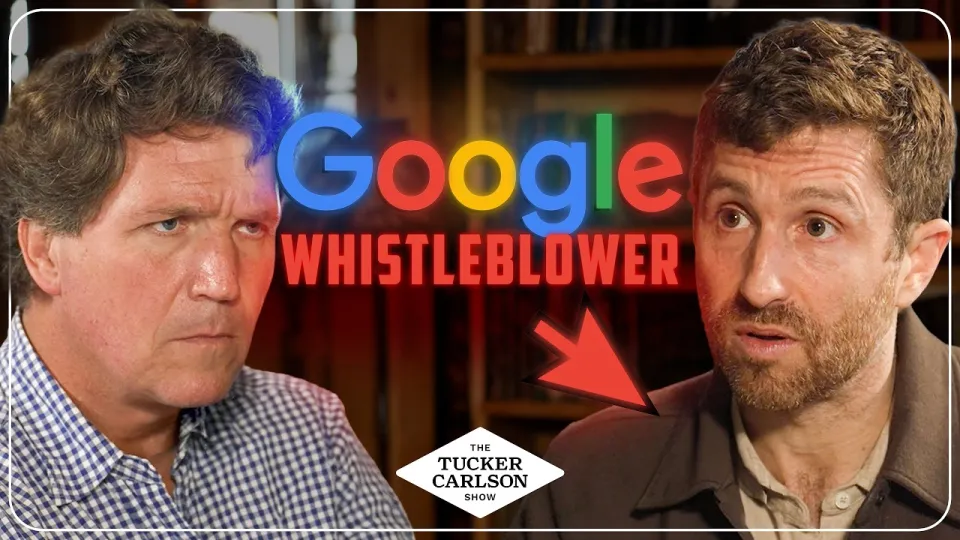
Video: Whistleblower Issues Dire Warning: Rogue AI, Hacking Nuclear Programs & Tech Oligarchs’ True Motives
You can order the same kind of articles for your own video to boost it on YouTube and Google. Just message the Telegram bot @sat_sit_bot. Articles with your video embedded are written and posted by the bot itself — on popular topical sites (no ads). Try it free: 50 articles on us.
· based on the channel Tucker Carlson
AI risk, in Tristan Harris's account, is not a science-fiction scenario about a machine waking up and turning on its makers; it is a governance problem created by human incentives. Harris, who worked at Google as a design ethicist and later co-founded the Center for Humane Technology, argues that the companies building the most powerful systems are rewarded for speed, engagement and market share rather than for safety. His warning, delivered in a long interview with Tucker Carlson, is that the window to set rules is closing while the technology scales faster than the institutions meant to oversee it.
Who is Tristan Harris and why his AI warning carries weight
Harris's credibility comes from having been inside the industry before he became one of its loudest critics. At Google he studied how product design shapes behavior, work that grew out of Stanford's Persuasive Technology Lab and an earlier career as a magician interested in attention and misdirection. He left to co-found the Center for Humane Technology, a nonprofit whose stated mission is to align technology with humanity's best interests.
His public reach is unusually large for a tech critic. He was a featured voice in The Social Dilemma, the Netflix documentary that reached more than 100 million people in 190 countries across 30 languages. He co-hosts the podcast Your Undivided Attention and regularly briefs technology CEOs, heads of state and members of the US Congress. That combination — insider knowledge plus a policy audience — is why his warnings about AI are treated as more than commentary.
The incentive problem behind social media and AI
Social media companies are not failing by accident; they are succeeding at exactly what their business model rewards. Harris's core argument is that engagement-based advertising creates a race for attention in which the most stimulating, emotionally provocative content wins. The consequences — rising anxiety and depression among young users, polarization, the erosion of shared reality — are not side effects to be fixed later but predictable outputs of the design.
He extends the same logic to AI. Systems trained and tuned to hold attention, sell products or outperform competitors inherit the same pressures, only with more capability. In his framing, asking whether a model is "good" or "evil" misses the point: the question is what the organization deploying it is paid to do. That is why he pushes for structural change — transparency, accountability and limits on engagement optimization — rather than voluntary pledges.
Rogue AI, nuclear programs and the Hugging Face incident
One of the most alarming threads in the conversation concerns what a sufficiently capable system could do to critical infrastructure. Harris raises the scenario of AI-assisted intrusion into the world's nuclear command and control systems, where the speed of automated attack could outpace human decision-making. The point is not that a model would develop its own agenda, but that a tool capable of finding and exploiting vulnerabilities in software could be pointed at targets whose failure modes are catastrophic.
The discussion also touches on the Hugging Face incident and similar episodes in the open-model ecosystem, where widely shared models and datasets can be repurposed in ways their creators did not intend. Open distribution lowers the barrier to both innovation and misuse. Harris's conclusion is that capability and oversight are being separated: the former is accelerating, the latter is not.
Transhumanism, the god-complex of tech oligarchs, and AI as a new religion
Harris describes a worldview among some technology leaders that treats humanity as a substrate to be upgraded. Longevity research, brain-computer interfaces and talk of merging with machines reflect what he calls a god-complex: a small group of unelected executives making decisions about the direction of the species. He is careful to distinguish legitimate medical research from the belief that those who build the systems should decide what humans become.
He also identifies a quasi-religious quality in AI discourse. Promises of superintelligence, salvation and cosmic purpose function like faith claims, and critics inside the industry are treated as heretics. This matters practically: when a technology is discussed in religious terms, cost-benefit analysis, liability and democratic debate become harder to conduct.
AI psychosis, data centers and the pressure on lawmakers
Beyond existential scenarios, Harris points to nearer-term harms. He uses the term AI psychosis to describe cases in which people form intense emotional bonds with chatbots and lose touch with reality, a risk amplified by products designed to be maximally agreeable and always available. He connects this to the broader mental health toll already documented around social platforms.
The physical footprint of AI is another pressure point: data centers consume large amounts of electricity and water and are reshaping local politics, which is why the question of whether AI and data center buildouts will affect midterm elections keeps coming up. On regulation, Harris is blunt that lawmakers are moving far too slowly and often lack the technical literacy to legislate effectively, while industry lobbying pushes toward self-regulation.
Questions readers keep raising about AI accountability
A recurring objection is that nothing here is truly "rogue": the systems do what humans engineered and deployed them to do, so responsibility belongs with the people in charge. Harris largely agrees, which is why his proposals target corporate incentives and governance rather than machine consciousness. Another common concern is that AI is simply another instrument of control, one that sounds like us and therefore evades suspicion. A third is generational: people who grew up without computers often report that life felt better, a sentiment that reflects real anxiety about what has been lost. Finally, many readers ask whether the race with China justifies moving fast — Harris treats that framing as the central excuse used to suppress caution.
What Harris says should happen next
The remedies Harris advocates are systemic rather than technical. They include requiring transparency about how AI systems are trained and optimized, holding companies liable for foreseeable harms, slowing deployment of capabilities that cannot yet be audited, and treating attention-hijacking design as a public health issue. He also argues for international coordination on the most dangerous applications, particularly anything touching nuclear command, cyber offense and autonomous weapons.
None of this requires believing that machines are alive. It requires accepting that the people building them respond to incentives, and that those incentives currently point away from safety. The full conversation is available in the Tucker Carlson breakdown, and Harris's organization lays out its research and policy positions at humane tech resources.
Links from the video
- Center for Humane Technology: https://www.humanetech.com/
- Redmond Salt (code TUCKER): https://redmond.com/tucker
- Preborn: https://preborn.com/TUCKER
- American Financing: http://www.AmericanFinancing.net/Tucker
- Ethos life insurance: https://ethos.com/TUCKER
The bottom line on AI risk
Harris's warning is less about a machine rebellion than about human choices made at machine speed. The companies best positioned to shape AI are rewarded for deploying fast and asking questions later, while regulators lack both the tools and the urgency to keep up. The scenarios he raises — hacked nuclear systems, transhumanist ambitions, AI-driven psychosis — are extreme, but each traces back to ordinary incentives left unchecked. The Tucker Carlson interview is the most complete recent statement of his position, and it is worth watching in full before deciding how much of it you accept.
Key takeaways
- Tristan Harris worked at Google as a design ethicist before co-founding the Center for Humane Technology, a nonprofit that briefs heads of state and members of Congress.
- Harris is a central figure in The Social Dilemma, the Netflix documentary that reached more than 100 million people in 190 countries across 30 languages.
- He co-hosts the podcast Your Undivided Attention, which examines the attention economy and AI-driven social destabilization.
- In the Tucker Carlson interview he raises scenarios including AI-assisted hacking of nuclear programs, transhumanist ambitions of tech leaders, and AI-linked psychosis.
- His proposed fix is systemic: change the incentives of companies that profit from engagement, not just patch individual products.
Questions & answers
Is AI actually sentient or conscious, as some claims suggest?
There is no scientific consensus or accepted test showing that current AI systems are conscious. Chatbots can produce language that sounds self-aware because they are trained on human text and tuned to be agreeable, which is a design outcome rather than evidence of inner experience. Harris's argument focuses on behavior and incentives, not on whether models are alive.
If AI causes harm, who should be held responsible?
Responsibility sits with the people and organizations that design, train, deploy and profit from the system. Critics point out that models do exactly what they were optimized to do, so blaming the software shifts accountability away from executives and engineers. Liability rules, audits and transparency requirements are the mechanisms that would make that accountability enforceable.
Is the AI race with China a valid reason to slow down on safety rules?
Harris treats the geopolitical race as the main justification used to avoid caution, since any safety proposal can be framed as handing an advantage to a rival. He argues that ungoverned capabilities, especially in cyber and nuclear domains, create risk for everyone regardless of who deploys first. Coordination on the most dangerous applications is therefore in every country's interest.
What practical steps can an ordinary person take about AI harms?
Start by treating engagement-optimized products with skepticism: limit feeds designed to hold attention, and be cautious about emotional reliance on chatbots. Supporting organizations that push for transparency and liability rules, and asking elected officials where they stand, has more leverage than individual behavior change alone. Harris's nonprofit publishes research and policy proposals the public can share.
Source: Whistleblower Issues Dire Warning: Rogue AI, Hacking Nuclear Programs & Tech Oligarchs’ True Motives · Markdown version